


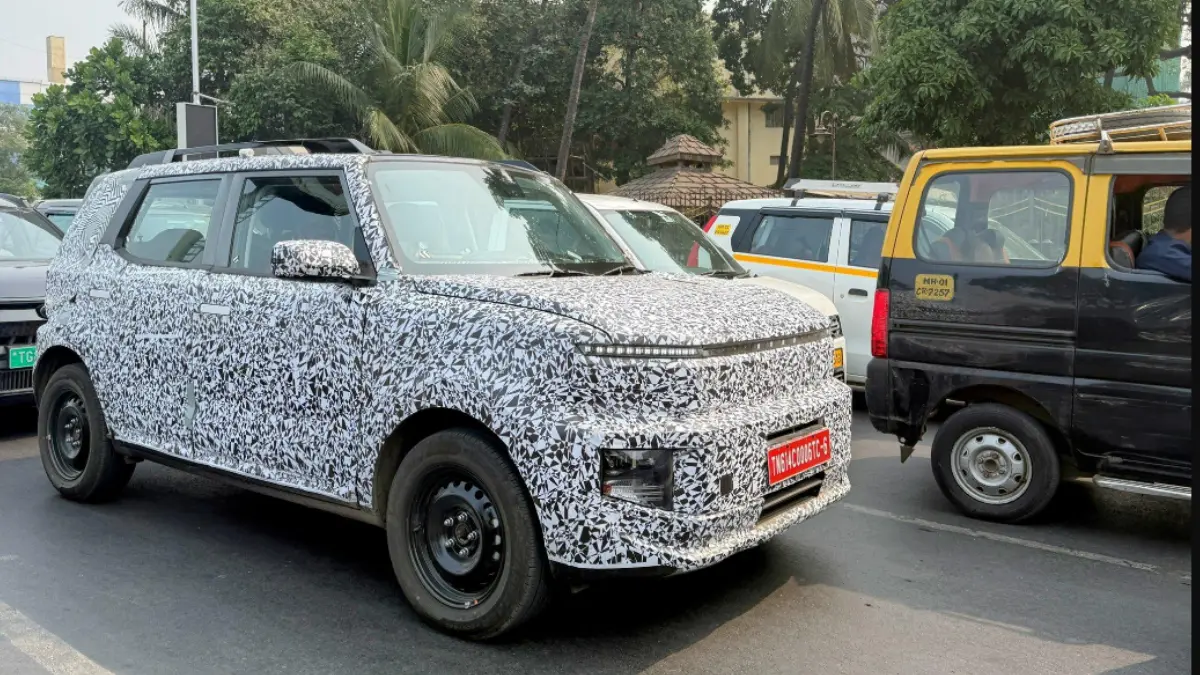
Working as an auto analyst, the latest spy shots from India have ended the mystery. These clear images confirm the spotted test mule is a new, fully electric SUV, with all signs pointing to a made-for-India product.
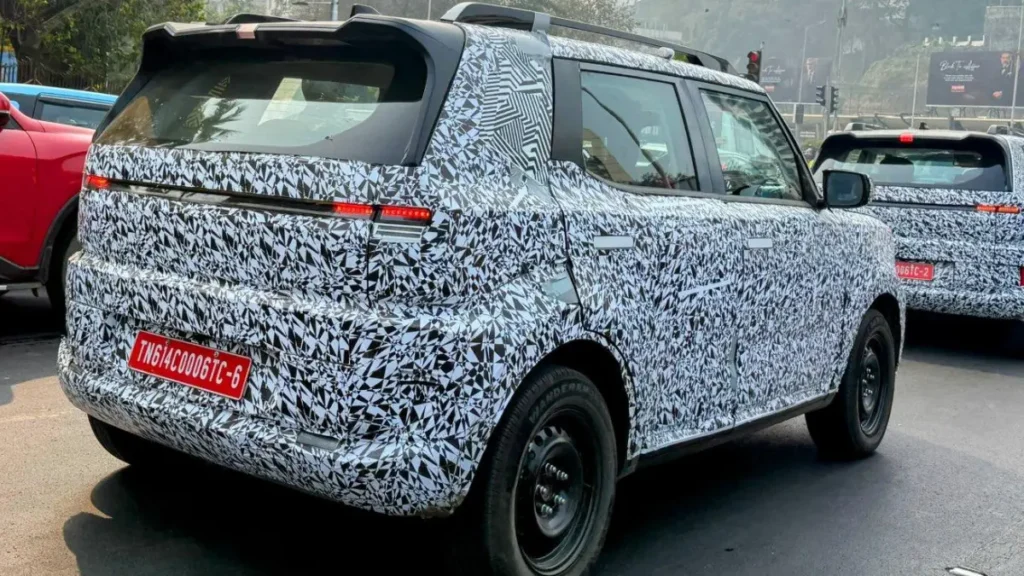
From my experience covering vehicle testing, seeing a vehicle in a convoy of three identical test mules is a significant sign. It tells me Hyundai has absolutely entered a crucial, advanced stage of final testing on public roads. After the initial sighting yesterday, these new angles captured in Mumbai city traffic are invaluable—they reveal the critical front and rear design details that camouflaged prototypes try so hard to hide. Notably, this move to multi-vehicle testing confirms the program’s maturity.
Decoding the Design Language
Looking at the front design, the biggest giveaway is now clearly visible. This SUV features four dots positioned at the centre of the nose, a signature design cue that Hyundai has been increasingly using across its newer models. To the trained eye, these four dots aren’t just styling; they represent the letter ‘H’ in Morse code. This clever motif has been seen on steering wheels and other exterior elements of recent Hyundai cars, including the new Hyundai Venue.
Equally important for confirming its electric nature is what’s clearly missing. There is no traditional fuel filler lid visible on either side of the vehicle, which strongly suggests the charging port is mounted at the front. This specific layout mirrors what Hyundai has done on the Hyundai Creta EV, powerfully reinforcing the mule’s electric SUV identity.
The Pixelated Signature
When piecing together a vehicle’s identity, the lighting elements offer a huge clue, and here the evidence is compelling. The pixelated LED DRL pattern seen on both the front and rear is a strong indicator, as Hyundai has been following this exact similar, pixel-inspired theme across its entire EV global lineup, most notably on the family Ioniq. Another telling match is the windshield angle, which precisely matches that of the Inster EV. Together with the closed-off front styling and the absence of a fuel lid, these pixelated LEDs confirm this SUV is not an ICE derivative but a dedicated electric platform.
Deciphering the Compact Proportions
Judging by its visible proportions, this SUV appears compact and boxy, with an upright stance, a flat tailgate, and short overhangs. This strongly suggests it has sub-4 metre dimensions, logically placing it below the Venue in Hyundai’s current lineup.
However, this raises an important question. Hyundai already has the Exter positioned as its micro SUV, and the Venue continues to be a strong seller in the sub-4m segment. Therefore, it’s unlikely that Hyundai is positioning this new model as a direct Venue alternative, as that would risk cannibalising its own portfolio. A more far plausible scenario is that this EV-specific model is being developed as a direct Tata Punch EV rival. The Punch continues to dominate the micro SUV space, and this rugged, boxy offering could be how Hyundai is looking to address this fast-growing segment with a dedicated electric play.
The India-First Testing Trail
One key detail that really stands out for an analyst is where this SUV was spotted. Hyundai vehicles are typically seen testing in South Korea first before appearing on Indian roads. In this case, the complete lack of sightings outside India so far is strongly suggesting this isn’t just a global model being assessed here; it’s a proper, India-first development.
Also Read: The New 2026 Indian Chief Vintage Has One Foot Firmly In The Past
The timing aligns perfectly with Hyundai’s publicly stated plans. The company has committed to launching a fully localised, made-in-India mass-market EV as part of its long-term roadmap, with a targeted launch timeline around 2027. The current spy timeline we’re seeing fits perfectly into this, as manufacturers usually begin this kind of extensive public road testing about 12–18 months ahead of a model’s official debut.
Connecting the Geographic Dots
The Mumbai spy shots point directly to the likely production home for this new SUV. It’s geographically close to Hyundai Motor India’s newly operational Talegaon plant, a facility that currently manufactures the new-generation Venue and is expected to play a major role in Hyundai’s future product strategy.
Given this proximity, it’s highly likely this new electric SUV will be manufactured at the Talegaon plant. Such Local production is critical if Hyundai wants to price the vehicle competitively in the sub-4m EV segment and truly achieve meaningful sales volumes.
Anticipating the Reveal
While key technical details like battery size, range, and power output remain under wraps, the expectations are already building. With multiple test mules now running openly in dense city traffic, more revealing details should emerge soon. One thing is absolutely clear: Hyundai’s smallest electric SUV for India is rapidly taking shape, and it could become a key pillar of the brand’s overall EV strategy in the coming years.
- Nose-Integrated Charging Point
- Significant Domestic Sourcing
- Smart Digital Interior
- Value-Driven Market Strategy
