


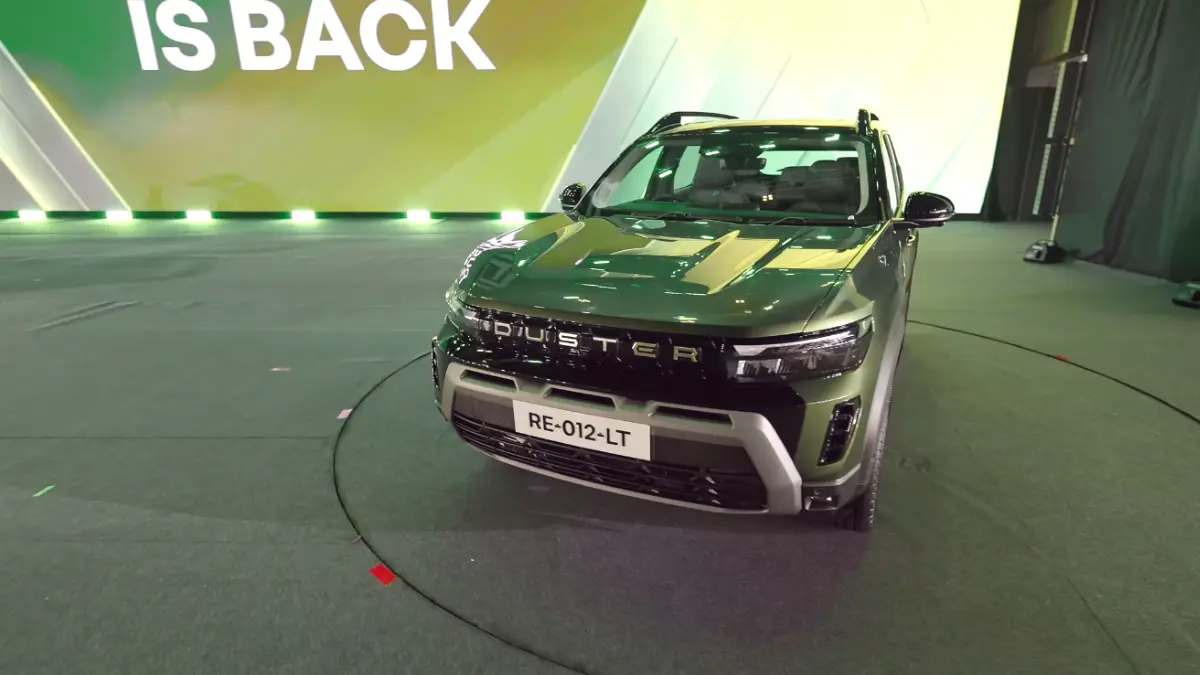
Mark your calendars. The official Prices for the highly anticipated new Renault Duster are set to be announced in mid-March. This key reveal comes just ahead of the vehicle’s commencement of customer deliveries, which is scheduled to begin in April 2026 across India.
The all-new Renault Duster is making an ambitious play for a definitive comeback in India’s crowded midsize SUV segment, and on paper, the ingredients look right. It gets a compelling triple powertrain strategy, including a powerful 1.3-litre turbo petrol engine and the significant introduction of a strong hybrid system promising top-tier performance. This potential is built on a heavily localised modular platform, which is key to its competitive promise.
A Deeply Localized Foundation: Platform, Space, and Future Potential
As the first outcome of Renault’s International Game Plan 2027, this third generation Duster is a car built for and from India. Unveiled in Chennai, it has been engineered with over 90 per cent local content. It cleverly combines practicality—being a five-seater that can boast a massive, segment-leading 700 litres of boot space measured to the roof—with a design and interior package tailored specifically for our market.
Its foundation is the highly flexible Renault Group Modular Platform on which it sits, an architecture that makes it truly future-ready. This platform isn’t just for today’s SUV; it’s confirmed to give rise to a three-row Duster-based SUV next year and could even spawn different body styles, fuel types, or an AWD configuration should Renault proceed with the idea. Furthermore, it comes integrating 35 safety features as standard to meet upcoming regulations, proving its development was about building for the long term.
Powertrain and Capability: A Three-Pronged Attack and Rugged Proportions
Unlike many rivals that rely on a single powertrain, Renault is aggressively attacking the midsize SUV segment with three distinct engine options. At the top sits the potent 1.3-litre turbo TCe 160, producing 163 PS and 280 Nm, offered with either a six-speed manual or a six-speed wet-clutch dual-clutch automatic, directly targeting performance-oriented buyers. Below it is the efficient 1.0-litre turbo petrol kicking out 100 PS. However, the biggest attraction is the tech-forward Strong Hybrid E-Tech 160, which combines a 1.8-litre GDI petrol engine with a 1.4 kWh battery pack. This system enables up to 80 per cent electric-only driving in city conditions and is slated to be available on sale by Diwali 2026.
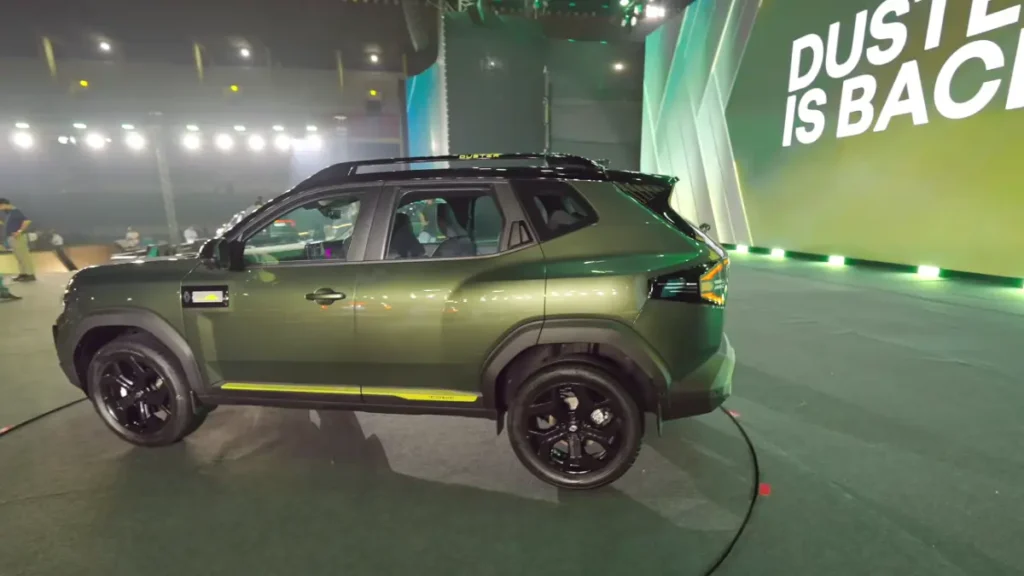
The 2026 Duster firmly retains its rough-road credibility. With a generous 212 mm of ground clearance, approach and departure angles of 26.9 degrees and 34.7 degrees respectively, and a rigid chassis, it remains genuinely trail-friendly. Its dimensions stand at 4,346 mm in length, 1,815 mm in width, and a 2,657 mm wheelbase. But the real, practical headline continues to be its cavernous 700-litre boot, solidifying its claim as the largest in the segment.
Inside and Out: The Renault Duster Complete Design and Technology Package
From the outside, the India-spec Duster has a distinctly muscular and premium appeal. Key elements like the bold trapezoidal grille with yellow accents, sleek full-LED lighting front and rear (including a horizontal rear light bar), rugged protective cladding, and stylish 18-inch diamond-cut alloys all add to its confident road presence.
Step inside the cabin, and it features thoughtful details like a driver-focused high centre console with an electronic shifter, essential physical controls for core functions, comfortable ventilated and powered front seats, and a dual-zone climate control system with advanced PM2.5 filtration.
Other key bits that enhance daily usability include a large panoramic sunroof, a convenient powered tailgate, and a generous 32.6 litres of in-cabin storage. The tech suite is comprehensive, centered around the responsive 10.1-inch OpenR Link touchscreen with built-in Google services and a crisp 10.25-inch digital instrument cluster.
This enables over 60 connected features. Safety and assistance are top-notch with 17 ADAS functions, multi-sense drive modes, hill descent control, six airbags, a TPMS (Tyre Pressure Monitoring System), and an EPB (Electronic Parking Brake).
You Should Know That: Tesla is Set to Discontinue the Model S and Model X
The Final Hurdles: Market Realities and The Wait for Verdict
So can the new Duster make a comeback and regain what it lost? Renault has certainly addressed nearly every key area on its checklist—power, modern features, upgraded interiors, and crucial hybrid tech—at least on paper. We’ll have to wait and see how it performs dynamically. However, from an Indian market perspective, the absence of a diesel option could be a major miss, especially in a segment where torque and fuel economy still matter deeply. Likewise, introducing the SUV without AWD might feel like a missed opportunity given the Duster’s adventurous heritage, though it’s rulout for the future.
Whether it truly wins back the midsize SUV segment will ultimately depend on a few critical factors: competitive pricing, the real-world hybrid economy it delivers, and how quickly the company responds to initial market feedback. Only time will tell if this new contender takes the market by storm.
