

The big news is here: Toyota has just unveiled the all-new 2027 Toyota Highlander. This is a major shift for this popular SUV nameplate. For the first time in its 25-year history, the Toyota Highlander is going fully electric, transforming into a battery electric vehicle (BEV). It’s now Toyota’s first three-row BEV for the U.S. market and the first BEV version of the Highlander to be assembled in America. Production will be handled at Toyota Motor Manufacturing Kentucky, with the crucial battery modules supplied from their new battery plant in North Carolina. This local approach is a smart move for building such an important new vehicle.
Electric Power & Range: Your 2027 Highlander Choices
The 2027 Toyota Highlander will be offered in two primary grades – the XLE and the Limited. Your powertrain choices and range will vary depending on your selected drivetrain configuration.
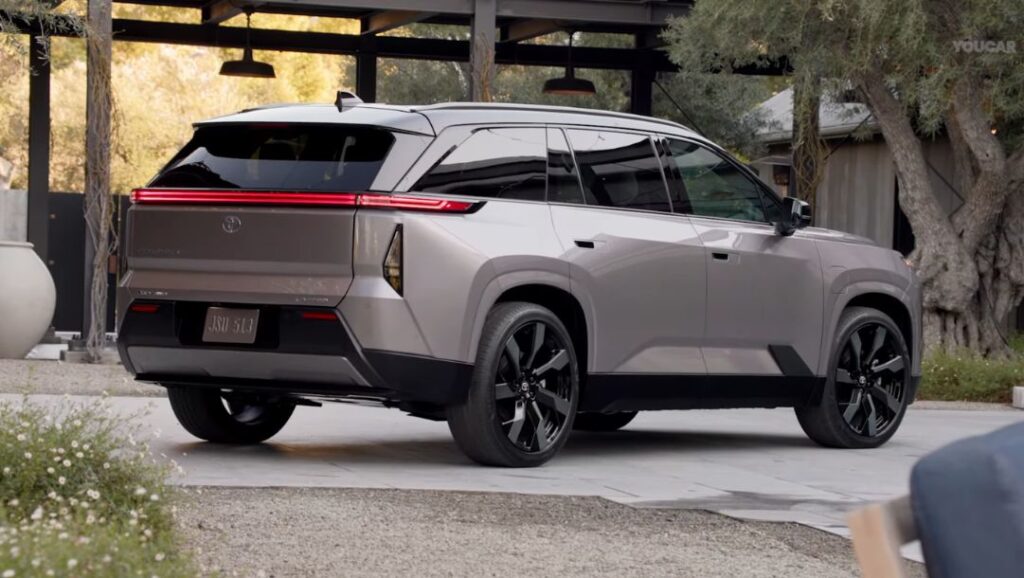
Configurations & Estimated Range
The XLE grade is available with either front-wheel drive (FWD) or all-wheel drive (AWD). The FWD versions use a 77.0 kWh battery, delivering a manufacturer-estimated 287-mile range. If you opt for AWD, you have a choice: the same 77.0 kWh pack for a 270-mile range, or a larger 95.8 kWh pack offering up to an estimated 320 miles. For the top-tier Limited grade, it comes standard with AWD and the larger 95.8 kWh battery, also delivering up to 320 miles of range.
Performance & Charging Capability
This flexibility extends to performance. Forward drive models deliver 221 horsepower and 198 pound-feet of torque. The AWD versions, however, generate a combined 338 hp and 323 lb-ft of torque, giving the new Highlander strong acceleration and the typical low center-of-gravity benefits of an EV.
All charging duties are handled via a North American Charging System (NACS) port, giving you access to a wide DC fast charging network across the U.S.. Under ideal conditions, a 10–80% charging session can be achieved in around 30 minutes. For home or destination charging, an 11 kW onboard AC charger and a dual-voltage cable are standard.
| Category | Specification | Details |
|---|---|---|
| Model & Production | Model Year | 2027 |
| Drive Type | Battery Electric Vehicle (BEV) | |
| Assembly Location | Toyota Motor Manufacturing Kentucky, USA | |
| Battery Module Source | Toyota Battery Plant, North Carolina, USA | |
| Grades & Drivetrain | Available Grades | XLE, Limited |
| Drivetrain Configurations | Front-Wheel Drive (FWD), All-Wheel Drive (AWD) | |
| Battery & Range | Battery Pack Options | 77.0 kWh, 95.8 kWh |
| Estimated Range (FWD, 77.0 kWh) | 287 miles | |
| Estimated Range (AWD, 77.0 kWh) | 270 miles | |
| Estimated Range (AWD, 95.8 kWh) | 320 miles (≈ 515 km) | |
| Standard Grade Battery | Limited: Standard AWD with 95.8 kWh pack | |
| Performance | Horsepower (FWD) | 221 hp |
| Torque (FWD) | 198 lb-ft | |
| Horsepower (AWD) | 338 hp (combined) | |
| Torque (AWD) | 323 lb-ft (combined) | |
| Charging | Charging Port Standard | North American Charging System (NACS) |
| DC Fast Charging (10-80%, ideal) | ~30 minutes | |
| Onboard AC Charger | 11 kW standard | |
| Charging Cable | Dual-voltage cable standard | |
| Dimensions | Platform | Modified TNGA-K (for high-capacity batteries) |
| Overall Width | 78.3 in / 1989 mm | |
| Wheelbase | 120.1 in / 3051 mm | |
| Height | 67.3 in / 1710 mm | |
| Interior & Cargo | Seating Capacity | Up to 7 (Three-row layout) |
| Cargo Space (3rd row folded) | >45 cu ft / 1274 liters | |
| Touchscreen | 14-inch | |
| Digital Instrument Cluster | 12.3-inch | |
| Ambient Lighting | Customizable 64-color | |
| Panoramic Roof | Available glass roof | |
| Technology & Safety | Infotainment System | Toyota Audio Multimedia with 5G |
| Smartphone Integration | Wireless Apple CarPlay & Android Auto | |
| Navigation | Integrated with cluster display | |
| Vehicle-to-Load (V2L) | Yes (bi-directional accessories required) | |
| Safety Suite | Toyota Safety Sense 4.0 standard | |
| Key ADAS Features | Pre-Collision System, Lane Tracing Assist, Proactive Driving Assist, Full-Speed Adaptive Cruise Control | |
| Market Info | Market Position | Toyota’s 4th BEV in the US (joins bZ, bZ Woodland, C-HR) |
| Global EV Plan | Part of Toyota’s 22 planned global electrified models | |
| Sales Start | Expected Late 2026 | |
| Pricing | To be announced closer to launch |
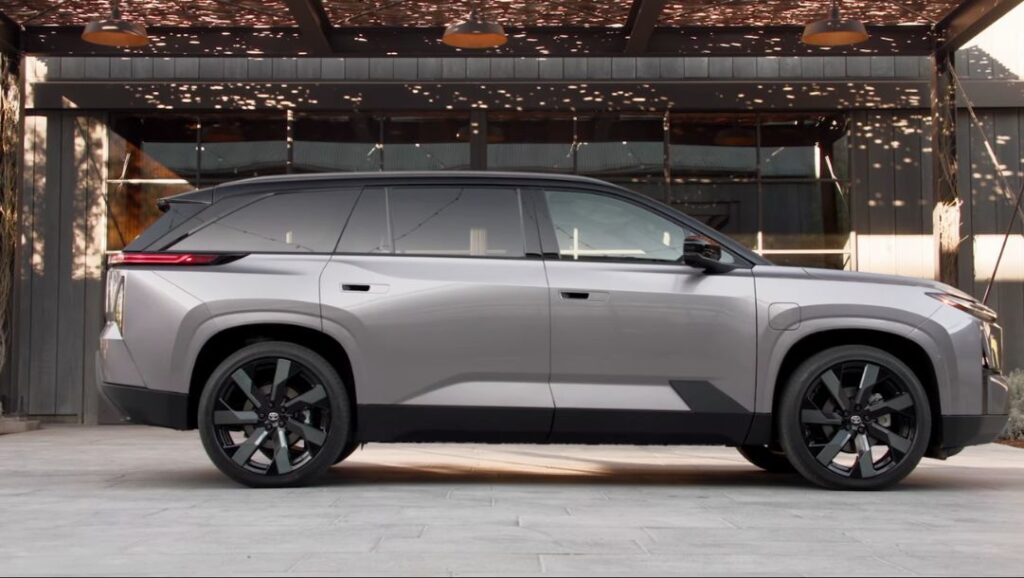
A Ground-Up Redesign for the Electric Age
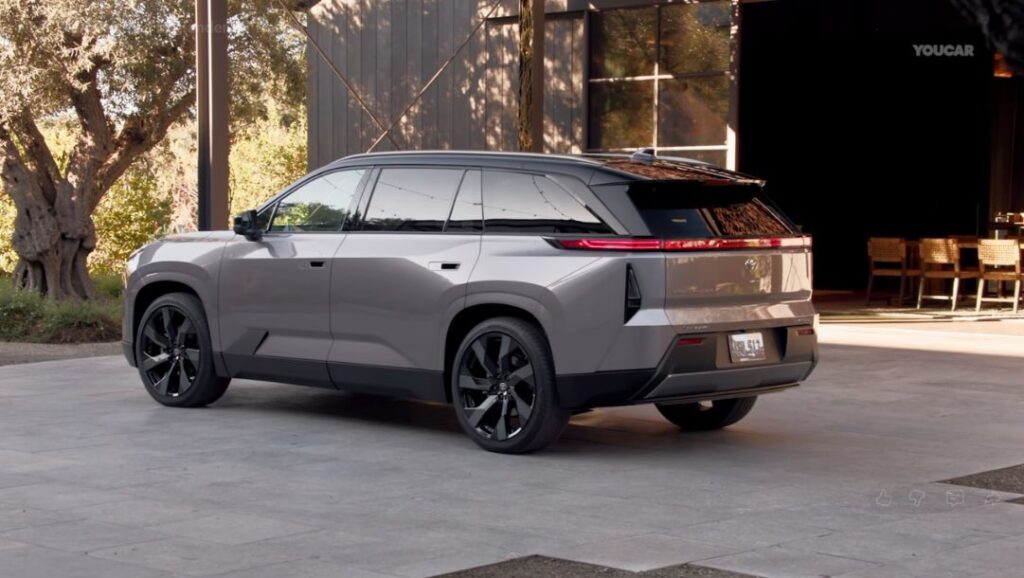
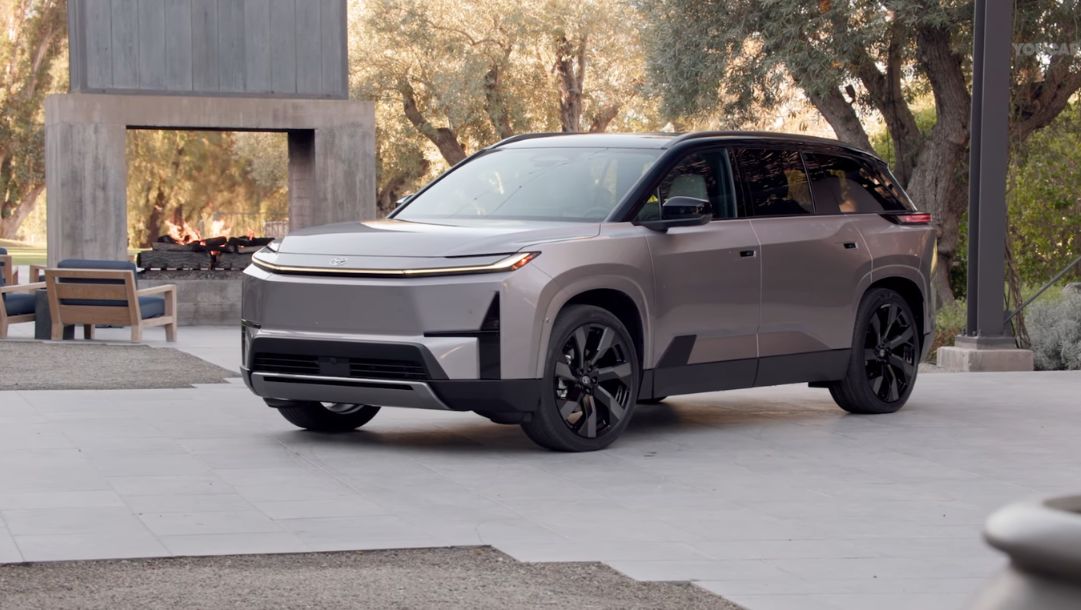
This redesigned Toyota Highlander is entirely new from the ground up, built on a modified TNGA-K platform specifically adapted for its high-capacity batteries. This fresh start lets the engineers rethink its shape. The result is an SUV that’s wider and has a longer wheelbase; the overall width increases to 78.3 inches (1989mm), while the wheelbase grows to 120.1 inches (3051mm), significantly improving the cabin and passenger space.
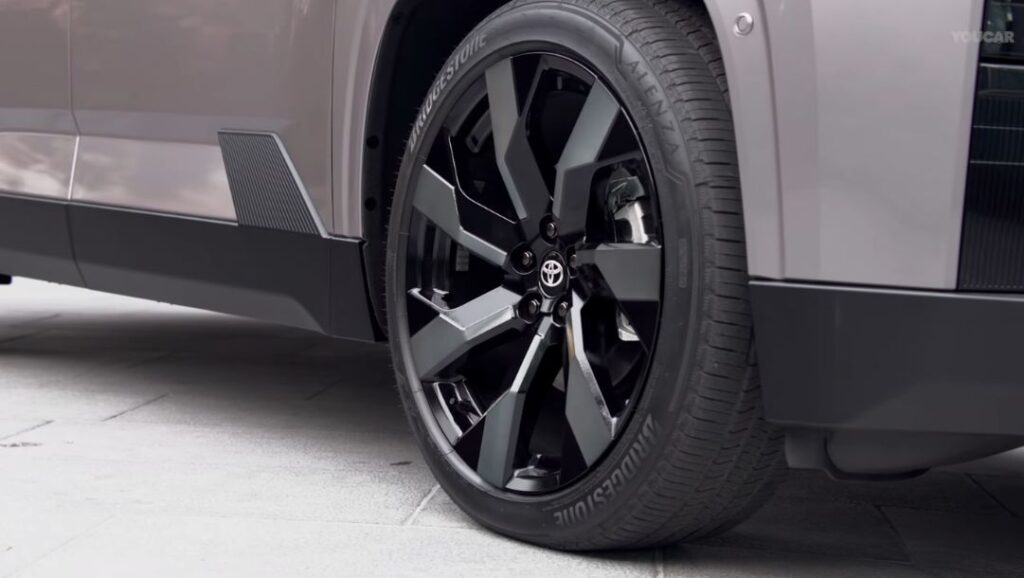
For a more dynamic look, its height is slightly reduced to 67.3 inches (1710mm) for a sportier stance. The exterior design adopts Toyota’s latest “hammerhead” front fascia, complete with slim DRLs, sleek flush door handles, strong fender flares, and smooth aerodynamic detailing.
Also Read: Mahindra Vision S SUV: The Expected Launchpad for the New NU_IQ Platform in 2027
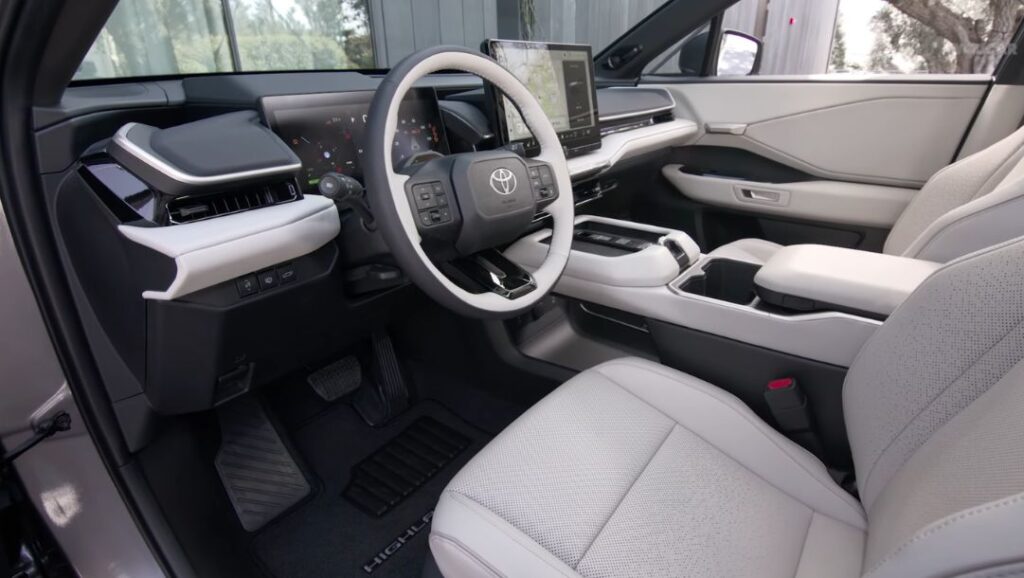
Inside, the cabin is a tech hub. It prominently features a massive 14-inch touchscreen paired with a sharp 12.3-inch digital driver display. You can set the mood with customizable 64-color ambient lighting, and an available panoramic glass roof opens up the space. The practical three-row layout comfortably seats up to seven passengers, and the utility is impressive: with the third row folded flat, the cargo space exceeds 45 cubic feet (1274 liters), which I’ve found in real use to be more than enough for a big family’s gear.
Full of tech and safety from charging to driving
Inside, the 2027 Highlander is equipped with the latest Toyota Audio Multimedia system, featuring fast 5G connectivity. It supports wireless Apple CarPlay and Android Auto, and its integrated navigation is smart enough to display turn-by-turn directions right in the digital instrument cluster, a feature I always appreciate for keeping my eyes on the road.
Also Read: Maruti Suzuki Nexa Offers Savings Of Up To Rs. 2.15 Lakh
A major addition for a Toyota model sold in the US is the Vehicle-to-Load (V2L) functionality. This functionality, which is a first for a US Toyota, is a game-changer, allowing the Highlander to power external appliances or serve as a backup power source in emergencies (using bi-directional accessories is required).
On the road, your peace of mind comes from a comprehensive suite of standard safety features. The vehicle includes the advanced Toyota Safety Sense 4.0 system. This version adds upgraded detection hardware and provides enhanced ADAS (Advanced Driver Assistance Systems) functionality. Standard features such as the Pre-Collision System, Lane Tracing Assist, Proactive Driving Assist, and Full-Speed Adaptive Cruise Control work together to make every drive smoother and significantly more secure.
Positioned for an Electric Future
When the 2027 Highlander launches, it officially joins the existing lineup—which includes the bZ, bZ Woodland, and C-HR—to become Toyota’s fourth battery-electric vehicle (BEV) in the American market. This is a clear sign of the brand’s accelerating electrification push. In fact, Toyota states it will soon offer a total of 22 electrified models globally. For those interested in this specific vehicle, sales of the all-electric Highlander are expected to begin in late 2026, with official pricing to be announced closer to the official launch date.